

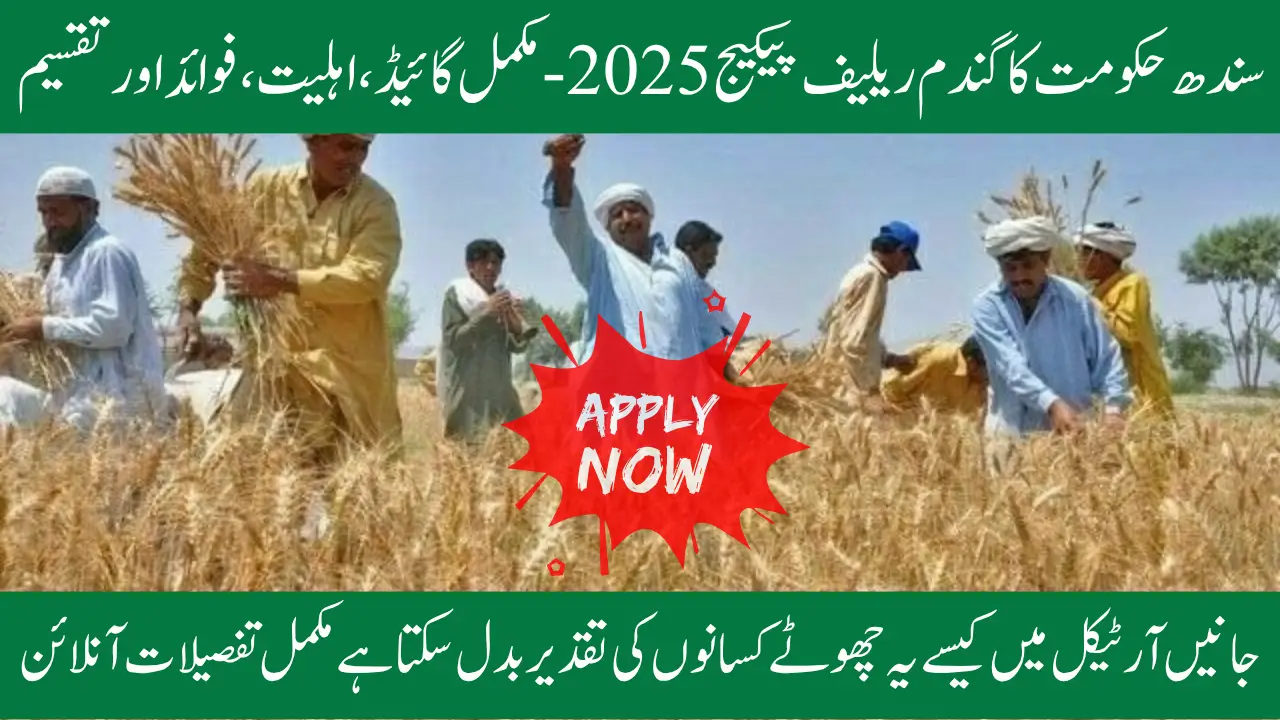
Overview of the Sindh Govt Wheat Relief Package
The Sindh Govt has introduced a historic Wheat Relief Package 2025 valued at Rs55.8 billion, aimed at providing immediate financial support to small-scale wheat farmers and low-income families. This initiative is designed to ensure that wheat remains affordable for households while enabling farmers to continue production despite rising costs. By offering timely assistance, the government aims to stabilize wheat cultivation and protect farmers from economic pressures, contributing to overall food security in the province.
Key highlights of the package include province-wide coverage, ensuring all districts of Sindh benefit from the program. The relief targets small farmers owning 1–25 acres and low-income households, providing direct cash support per acre and subsidized inputs such as DAP and urea fertilizers, distributed in phases. To maintain transparency and proper allocation, the government uses CNIC, Benazir Hari Card, and land records for verification. Overall, the package is designed to balance the needs of farmers and families, promoting sustainable wheat production across Sindh.

Purpose and Importance of the Wheat Relief Package
The relief package aims to reduce financial pressure on farmers, stabilize wheat prices, and secure food supplies for vulnerable communities. By providing timely support, Sindh ensures a strong agricultural base and prevents food inflation.
Main Objectives:
- Reduce the impact of rising input costs fertilizers, seeds, machinery
- Support small farmers to continue wheat cultivation without losses
- Ensure affordable wheat and flour for low-income families
- Improve food security and self-sufficiency
- Strengthen rural economy and labor opportunities
The package is designed to protect farmers’ income and ensure citizens have access to essential wheat supplies.

Who Will Benefit from the Package?
The Sindh Government ensures inclusive support for farmers and households most in need.
Eligible Beneficiaries:
- Small-scale farmers: Owning 1–25 acres
- Wheat growers: Verified through land records
- Registered Benazir Hari Card holders: Ensuring authenticity
- Low-income families: Access to subsidized wheat and flour
- Rural communities: Supporting laborers and seasonal workers
Over 411,000 farmers and thousands of families will benefit directly from this initiative.

Subsidy Amount and Financial Assistance
Each eligible farmer receives Rs24,700 per acre, designed to cover input costs for healthy wheat production. The subsidy ensures financial relief while encouraging timely sowing.
Details of Support:
- DAP fertilizer: Distributed in November 2025
- Two urea bags: Provided after Jan 20, 2026, post-cultivation verification
- Direct cash transfers: For farmers without easy access to inputs
- Monitoring: Ensures fair allocation to genuine beneficiaries
- Flexibility: Farmers can adjust cultivation based on weather and land conditions
Financial support reduces production costs and strengthens small farmers’ capacity to grow wheat efficiently.
You Can Also Read: BISP 8171 NADRA Biometric Verification 2025 – Final Step to Unlock Your Pending Payments Instantly
Wheat Distribution and Subsidy Process
The government has developed a structured distribution system for smooth delivery.
Process Overview:
- Wheat was released to registered mills and storage facilities
- Subsidized bags are clearly labeled “Not for Sale” to prevent misuse
- Farmers collect inputs after verification through CNIC and land records
- Field monitoring ensures fertilizers reach the intended farmers
- Open agriculture offices for inquiries and assistance
The process is designed for transparency, accountability, and timely delivery.
You Can Also Read: Electric Bus DG Khan Route Map 2025: Complete Guide for Commuters, Fare, and Schedule
Required Documents for Wheat Relief Package
Farmers must provide specific documents for verification to ensure authentic and fair distribution.
Documents Needed:
- Valid CNIC: Original and photocopy
- Land ownership proof: Digitized land records or Fard
- Registered mobile number: For SMS alerts and updates
- Benazir Hari Card: For labor and household verification
- Optional: Passport-size photo for records
Complete documentation ensures faster verification and prevents delays in receiving the subsidy.
You Can Also Read: BISP Payment Not Received? Use WhatsApp to File an Official Complaint
Monitoring and Implementation Strategy
Strong monitoring ensures the relief package is delivered efficiently and that misused funds are prevented.
Monitoring Measures:
- Field verification teams: Inspect crop cultivation and farmer registration
- Provincial and district committees: Track distribution and progress
- Digital control center: Centralized monitoring of wheat deliveries
- Open offices on Saturdays: Allow farmers to complete verification
- Suspension of long leaves: Ensure full staff availability during the distribution season
Multi-level monitoring guarantees the timely and correct delivery of benefits.
You Can Also Read: National Youth Employment Policy: Fresh Job Opportunities for Young People know How to Apply
Measures to Prevent Misuse
To protect the integrity of the program, strict penalties are in place.
Anti-Misuse Policies:
- Subsidized fertilizer bags marked “Not for Sale”
- Five-year ban: For farmers misusing the subsidy
- Blacklisting: For fertilizer companies violating rules
- Disciplinary action: For negligent government officials
- Regular audits and field inspections
These safeguards ensure relief reaches genuine farmers and prevent corruption.
You Can Also Read: Punjab Climate Leadership Internship Phase II: How to Apply for the 2025 Program, Eligibility, Stipend & Deadline
Political and Historical Background
The initiative reflects PPP’s commitment to agricultural welfare under the leadership of Bilawal Bhutto Zardari.
Key Points:
- Historical precedent: A Similar successful initiative in 2008
- Minister Sardar Muhammad Bakhsh Mehar calls it a “historic step”
- Supports small farmers and agricultural laborers
- Reinforces food security and local wheat production
The policy is both a political commitment and a strategic measure for rural development.
You Can Also Read: Rs 25000 Prize Bond Draw 2025: Lucky Numbers, Winning Amounts & Official Updates
How This Policy Supports Food Security
By aiding farmers financially and providing fertilizers, Sindh strengthens local wheat production.
Food Security Measures:
- Increased wheat yield reduces dependency on imports
- Stabilizes wheat prices for low-income households
- Encourages sustainable agriculture practices
- Creates seasonal labor opportunities
- Improves rural household income stability
The policy ensures consistent wheat supply, reducing food scarcity risks.
You Can Also Read: BISP 8171 Payment Started via Habib Bank & Alfalah – Check Your Payment Status Now
Conclusion
The Sindh Government Wheat Relief Package 2025 is a strategic and inclusive initiative that supports both farmers and vulnerable communities. By providing financial assistance, subsidized fertilizers, and strong monitoring, the government ensures wheat cultivation continues efficiently and families have access to affordable food.
This relief package also strengthens food security, rural employment, and local economies. Through a transparent registration and monitoring system, benefits are delivered to genuine farmers while preventing misuse. The initiative sets a benchmark for agricultural welfare programs and highlights Sindh’s commitment to supporting its farmers.
You Can Also Read: BISP 8171 November Payment Still Not Released? Latest Official Update 2025
Frequently Asked Questions
Who is eligible for the Sindh Wheat Relief Package 2025?
Farmers owning 1–25 acres and registered low-income households verified through CNIC and Benazir Hari Card.
How much subsidy will each farmer receive?
Rs24,700 per acre, along with subsidized DAP and urea fertilizer.
When will DAP and urea be distributed?
DAP in November 2025; two urea bags after January 20, 2026, following verification.
How can farmers apply or verify their eligibility?
Through CNIC, Benazir Hari Card, and land records at agriculture offices or online registration portals.
What are the penalties for misuse of the subsidy?




Farmers face a five-year ban, companies may be blacklisted, and officials can face disciplinary action.
You Can Also Read: Prize Bond 200 Results Today – Latest Draw Winners, Schedule and Updates 2025