

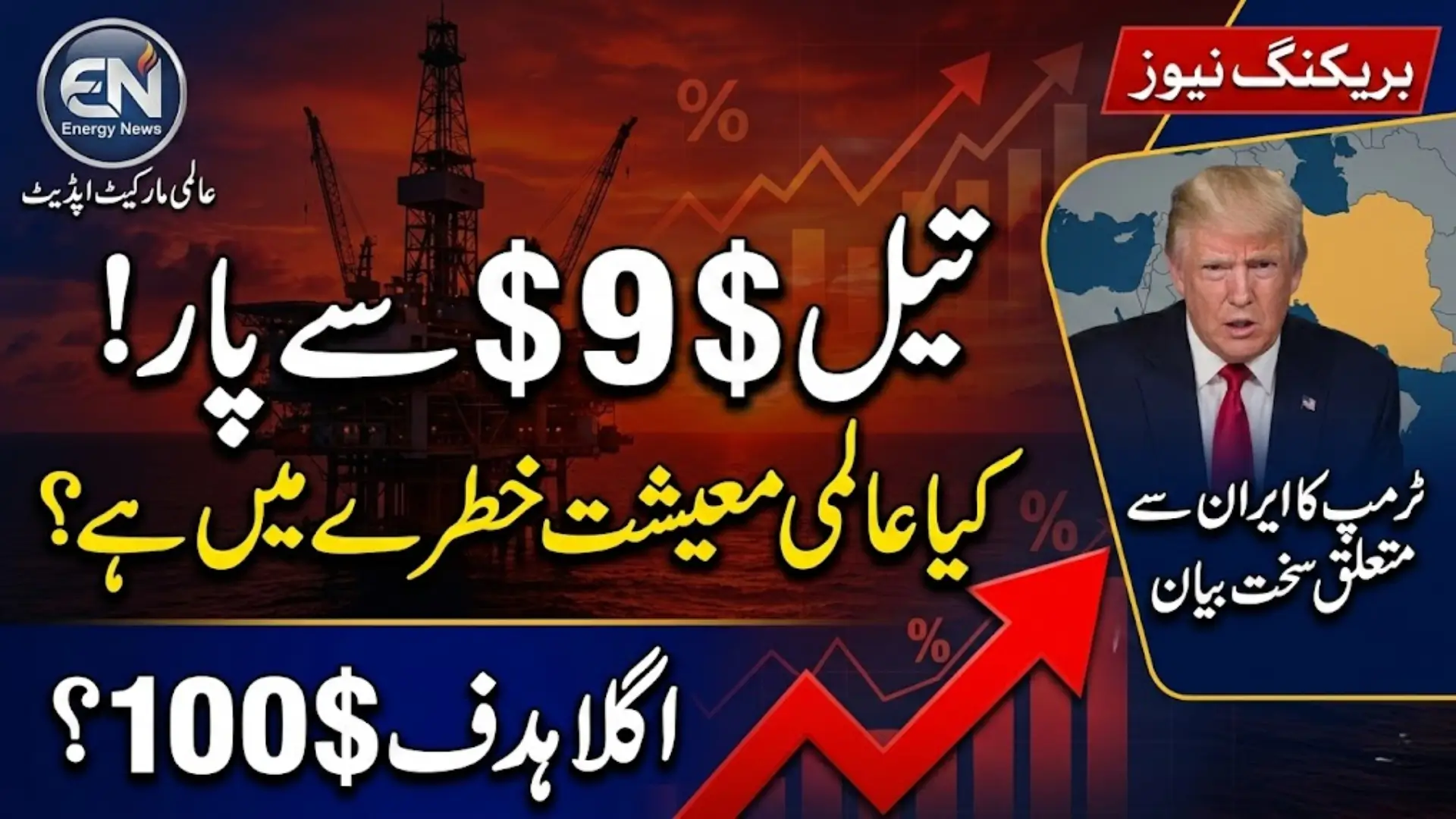
Introduction Brent Crude Oil Prices Cross $90
Brent crude oil prices have surged above $90 per barrel for the first time in nearly two years, marking a significant movement in global energy markets. The sudden rise occurred after US President Donald Trump made strong remarks about Iran, stating that there would be no deal with the country and telling Iran to surrender. These comments immediately triggered reactions across international oil markets, pushing major crude benchmarks higher during early trading sessions.
The rise in Brent crude oil prices highlights how geopolitical tensions can rapidly influence global commodity markets. Oil traders closely monitor political developments in the Middle East because the region plays a critical role in global oil supply. As tensions increased, investors reacted quickly, causing oil prices to jump sharply across multiple crude benchmarks.

- Brent crude crossed $90 per barrel during early trading
- The price surge followed strong geopolitical statements
- Global oil markets reacted within hours
You Can Also Read: MKB Web Portal 2026 – Complete Guide to Maryam Ko Batain Registration
Brent Crude Oil Prices Cross $90 After Trump’s Statement
Brent crude oil prices rose sharply after President Trump’s remarks regarding Iran created uncertainty in energy markets. Traders often respond quickly to geopolitical tensions because conflicts in the Middle East can disrupt oil supply routes and production. The sudden market reaction pushed Brent crude prices significantly higher during the early trading session.


At the time of reporting, Brent crude rose by $5.50, which represents a gain of around 6.5 percent. This pushed the benchmark price to approximately $90.91 per barrel, marking the first time in two years that Brent has crossed this important price level. The increase shows how political developments can quickly influence the direction of global energy markets.
- Brent crude gained $5.50 during early trading
- Prices increased by 6.5 percent in a single session
- The benchmark reached $90.91 per barrel
You Can Also Read: Gold Rate in Pakistan Today – Latest 24K Gold Price, International Market Trends

WTI and Murban Crude Also Record Sharp Gains
The rise in Brent crude oil prices was not limited to one benchmark. Other major crude oil standards, including West Texas Intermediate (WTI) and Murban crude, also experienced strong gains during the same trading period. This demonstrates that the global oil market often moves together when geopolitical risks increase.
West Texas Intermediate, the main US crude benchmark, climbed significantly as traders reacted to market uncertainty. At the same time, Murban crude, a key Middle Eastern benchmark, recorded even higher price levels. These simultaneous increases show the widespread impact of geopolitical events on international energy markets.
- WTI rose to approximately $88.8 per barrel
- Murban crude reached $100.6 per barrel
- Global oil benchmarks moved upward together
You Can Also Read: PSER Punjab Gov PK Registration 2026 – Complete Online Application
Major Crude Oil Price Changes
| Oil Benchmark | Price Increase | Current Price |
|---|---|---|
| Brent Crude | +$5.50 (6.5%) | $90.91 |
| WTI Crude | +$7.86 (9.7%) | $88.8 |
| Murban Crude | +6.45% | $100.6 |
Middle East Tensions Push Energy Markets Higher
The Middle East remains one of the most important regions for global oil production and transportation. Any increase in political tension in this region immediately attracts attention from energy traders and analysts. Recent developments involving Iran have raised concerns about possible supply disruptions, which contributed to the rapid increase in oil prices.
Markets are particularly sensitive to events that could affect shipping routes in the Gulf region. Many oil shipments pass through this area, and any instability could slow supply flows to international markets. Because of these risks, investors often react quickly, leading to sudden spikes in crude oil prices.
- Middle East supplies a major portion of global oil
- Gulf shipping routes are critical for global trade
- Political tensions create fears of supply disruptions
You Can Also Read: 9999 Online Check 10000 – Complete Guide to Ramzan Relief Registration
Shipping Costs and Logistics Pressures Affect Oil Markets
Oil markets are not only influenced by production levels but also by transportation and logistics. When geopolitical tensions rise, shipping costs, tanker rates, and war-risk insurance premiums often increase quickly. These logistical factors can push energy prices higher even before actual supply shortages occur.
Recent reports show that shipping costs between the United States and Asia have increased significantly due to the conflict risks in the Middle East. War-risk insurance premiums for tankers have also risen, which adds additional costs to oil transportation. These factors contribute to the upward pressure on global crude prices.
- Tanker shipping costs have increased significantly
- War-risk insurance premiums are rising
- Logistics disruptions are affecting global oil trade
You Can Also Read: 8070 Online CNIC Check 10000 – Complete Guide for PM Ramzan Relief Package
Asian Oil Processing Countries Cut Production
Supply pressures have also increased because several major Asian crude processing countries have decided to reduce oil production. These decisions have tightened the overall supply of refined products and crude oil in international markets. When supply decreases while demand remains steady, prices naturally move higher.
The production cuts have added another layer of pressure on oil markets that were already reacting to geopolitical tensions. As a result, investors and traders are watching both supply decisions and political developments to understand where prices might move next.
- Asian crude processors reduced production levels
- Supply tightening contributed to price increases
- Global demand for oil remains relatively strong
You Can Also Read: 8070 Online CNIC Check 10000 – Complete Guide for PM Ramzan Relief Package
Analysts Predict Brent Crude Oil Prices May Reach $95
Market analysts believe that Brent crude oil prices could continue rising if geopolitical tensions remain unresolved. Some experts predict that oil could establish a new price base around $95 per barrel in the coming days. This projection reflects the strong upward momentum currently seen in energy markets.
However, analysts also emphasize that oil prices can change quickly depending on political developments and supply decisions. If tensions escalate or supply disruptions occur, prices could move even higher. On the other hand, any diplomatic progress could stabilize the market.
- Analysts expect Brent to move toward $95 per barrel
- Strong market momentum is pushing prices upward
- Political developments will influence future trends
You Can Also Read: Islamabad Eid Holidays 2026: Federal Schools and Colleges
Key Factors Driving Oil Price Surge
| Factor | Impact on Oil Prices |
|---|---|
| Geopolitical tensions | Increase market uncertainty |
| Shipping and logistics costs | Raise transportation expenses |
| Production cuts | Reduce global supply |
| Investor sentiment | Accelerate price movements |
Energy Markets React Faster to Logistics Than Production
Some analysts on social media platform X explained that energy markets often react faster to logistical signals than to production changes. For example, rising tanker rates, war-risk insurance, and shipping premiums usually appear before supply shortages are fully reflected in the market.
This means that early warning signs of higher oil prices often come from transportation and insurance sectors rather than production statistics. Because tensions in the Gulf region are currently high, these signals have appeared quickly, contributing to the surge in oil prices.
- Logistics signals often appear before supply disruptions
- Tanker rates can influence market sentiment
- Insurance premiums reflect geopolitical risk
You Can Also Read: AI Driving License Test Lahore: Traffic Authorities Introduce Smart Vehicles
Will Oil Prices Cool Down or Continue Rising
Some market observers believe that the current spike in Brent crude oil prices could cool down after a few trading sessions. Short-term market reactions often occur quickly when geopolitical news breaks, but prices sometimes stabilize once the initial shock fades.
However, prolonged tensions or disruptions in supply chains could keep prices elevated for a longer period. If geopolitical risks remain high and production cuts continue, global oil prices may stay above recent levels or even move toward the $100 mark.
- Short-term spikes can occur due to sudden news
- Market stability depends on political developments
- Long-term disruptions could push oil above $100
You Can Also Read: Rehmat Card Scheme Punjab: Financial Assistance Program for Widows
FAQs
Why did Brent crude oil prices rise above $90?
Brent crude oil prices increased after geopolitical tensions escalated following statements about Iran. Market uncertainty pushed traders to react quickly.
What is the current price of Brent crude oil?
Brent crude oil recently traded around $90.91 per barrel after gaining about 6.5 percent in early trading.
How did WTI crude react to the news?
WTI crude also surged, rising to approximately $88.8 per barrel as global oil benchmarks moved higher together.
Why do geopolitical tensions affect oil prices?
Conflicts in oil-producing regions can disrupt supply routes and production. This risk often causes traders to push prices higher.





Could oil prices reach $100 again?
Some analysts believe prolonged geopolitical tensions and supply cuts could push oil prices toward or above $100 per barrel.
You Can Also Read: Poco X Pro Series: Upcoming Smartphones to Feature MediaTek Dimensity 8500